
School place planning remains a challenge, as a range of factors continue to influence the demand for school places, including birth rates, housing growth, migration and pupil movements.
Demand for school places is subject to ongoing change, and local authorities and schools have to consider carefully when and where to add or remove places.
The Children’s Wellbeing and Schools Act (“CWSA”) received Royal Assent in April 2026 and will introduce several key changes to improve children’s education, including measures to ensure there are enough school places in local areas and that children without a place can secure one quickly.
The Act gives local authorities greater flexibility when establishing new schools, rather than being restricted to academy-only routes in most circumstances, so they can meet the needs of local parents. Schools and local authorities will also work together when it comes to school admissions and place planning.
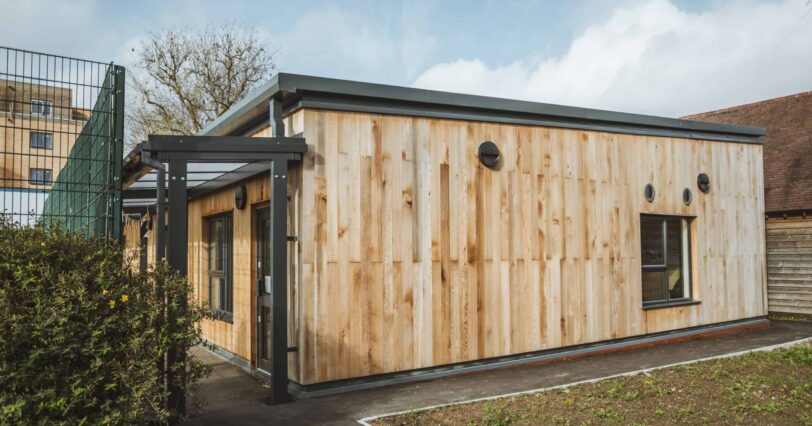
These changes may increase the need for some schools and local authorities to review existing capacity and consider site expansion or new provision where demand exists. Modular solutions can provide schools with additional capacity quickly, cost-effectively and sustainably.
Ensuring flexibility to respond to changing capacity demands
Capacity planning will already be taking place for the next school year to ensure buildings on school sites can safely accommodate incoming pupils. As population numbers continue to fluctuate and local demographics change, modular, temporary classroom spaces provide the flexibility that modern schools need. Modular units can be expanded or reconfigured, helping to ease the pressure of accommodating a changing number of students. Schools can start with just a few modular units and add more as necessary, ensuring their school sites evolve in line with future student intakes.
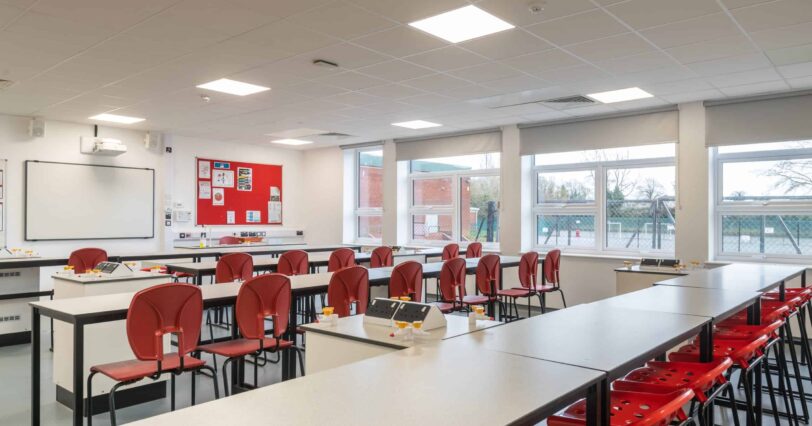
Whether a school needs extra classrooms, science labs, music rooms or specialised spaces, modular solutions can be tailored to suit. This flexibility ensures that schools aren’t only getting the space they need in the short-term, but that it’s fit for purpose in the long-term too.
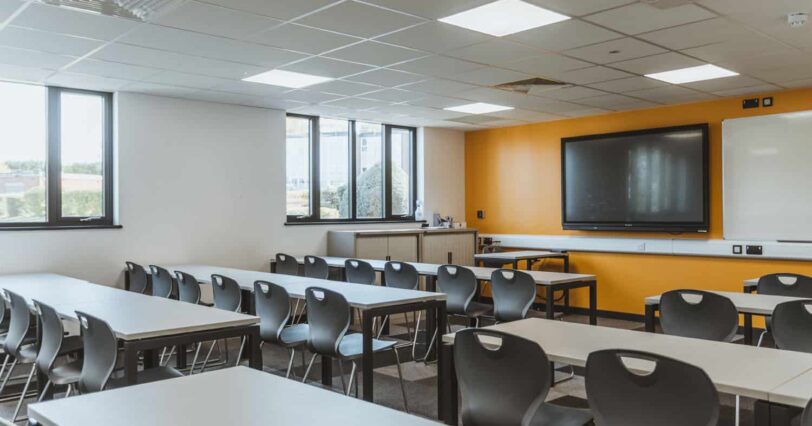
These spaces can be customised to specifically accommodate students’ needs, for example acoustic ceiling tiles can be used to minimise external noise and provide a peaceful, calm learning environment.
Efficient delivery
Operational schools with tight budgets require buildings to be constructed quickly and in a cost-effective manner.
Modular buildings offer efficiency, as they are built off-site in controlled factory environments. The streamlined process enables a quicker turnaround, reduced costs and minimal disruption to existing operations. This enables schools to quickly respond to increased enrolment or new measures around school places.
Don’t forget the fundamentals… sustainability is key
With the introduction of the CWSA, it’s easy to focus solely on creating additional capacity, but schools and estates managers must also remember the fundamentals of delivering sustainable education projects, specifically in ensuring new projects help achieve sector-wide Net Zero goals.
Modular construction can offer significant carbon and waste reduction benefits compared with many traditional construction approaches. Materials used in modular construction are typically less carbon-intensive than those used in traditional methods. Off-site manufacturing significantly cuts down the wastage experienced on construction sites by ensuring materials are used precisely, minimising material waste and landfill disposal. Less time on-site also decreases energy usage from transporting materials, equipment and labour, as all building components are manufactured in one place.
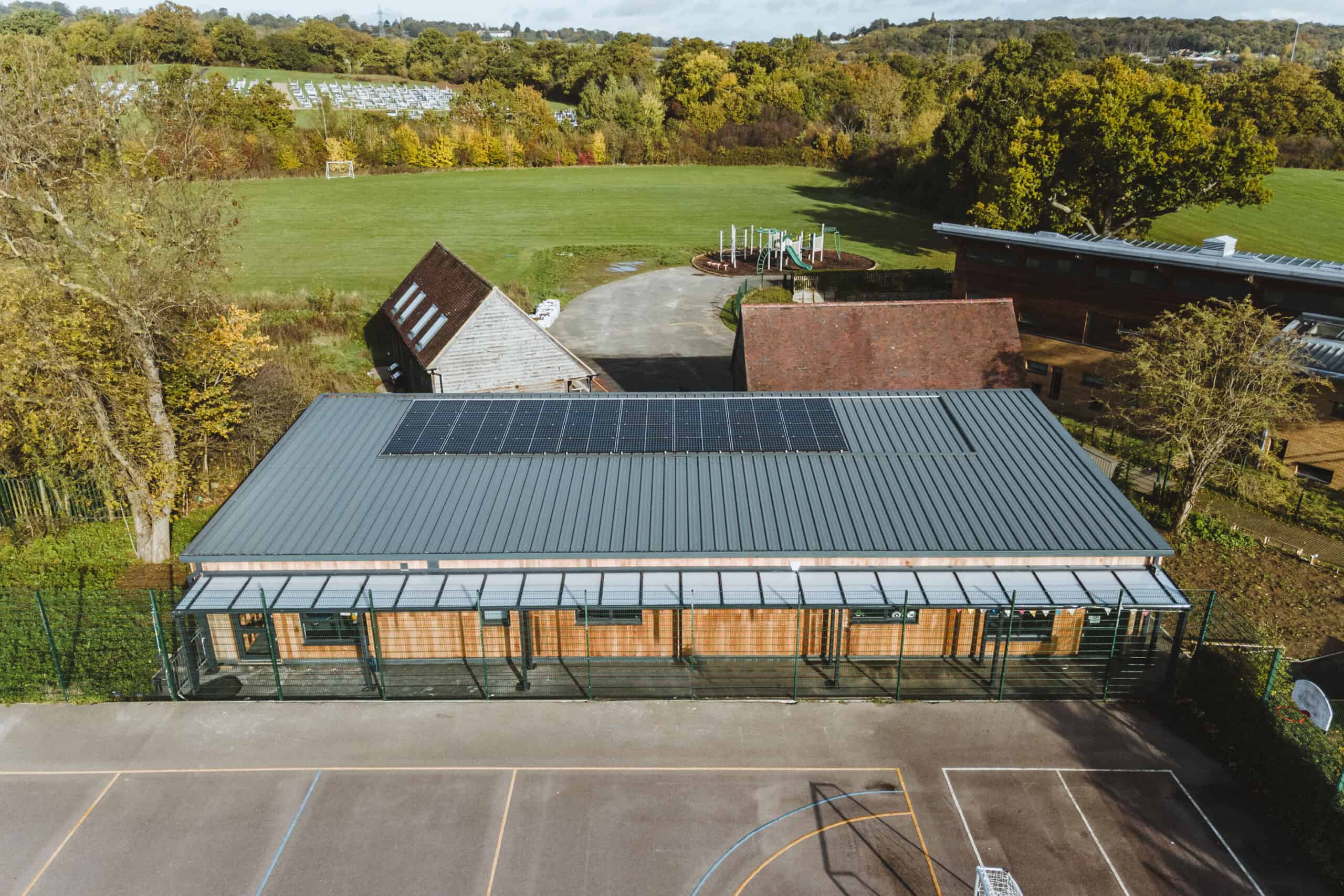
This reduction in energy consumption can also be taken further to the buildings themselves with the implementation of low and zero carbon technologies. Modular school buildings can be fitted with renewable and low-carbon technologies, such as solar thermal systems, photovoltaic panels, heat pumps and efficient mechanical ventilation systems.
Importantly, from a circular economy and sustainability perspective, modular solutions are inherently reusable, reconfigurable and recyclable, to minimise the need for new components and modules in future.
As schools adapt to evolving legislation and changing pupil demand, modular solutions can provide high-quality, flexible, sustainable learning environments that will support local communities for years to come.
Want to find out more about how modular solutions can help support smarter school place planning?Contact the team here.