
The education sector has a significant role to play in helping the UK government meet its goal of achieving Net Zero by 2050.
School estates managers have increasingly been focused on lowering emissions and improving efficiency through new technology, green policies and modern school buildings.
Recently, staff, parents, local councils, and central government have increased pressure on schools to improve on-site air quality specifically, as part of wider efforts to reduce climate impacts and protect student wellbeing.
Poor air quality poses a particular risk in school environments because children inhale more air than adults in proportion to their bodyweight and their organs and immune systems are still developing. To reduce the harmful effects of pollution on children, which can include respiratory problems, reduced cognitive performance, and increased exposure to airborne illnesses, such as Covid-19, schools need to prioritise improving air quality.
Why is air quality so important in schools?
UK children spend around a quarter of their waking hours at school each year. If education estates have poor on site or indoor air quality, students face increased exposure to air pollution and its associated health and learning impacts.
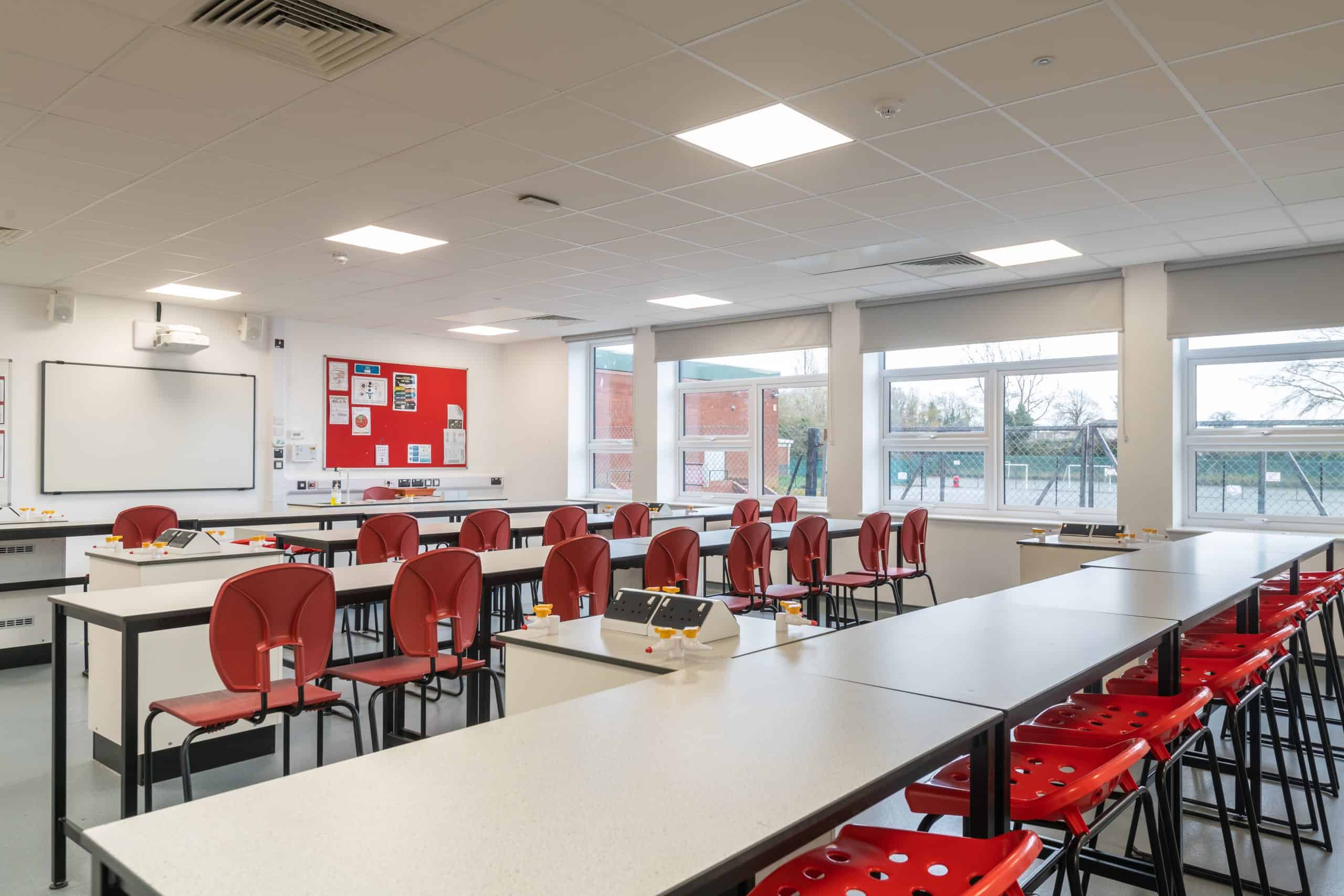
High levels of pollutants, such as carbon dioxide and particulate matter, have been found to negatively affect the concentration, learning progression and cognitive function of students. Poor room ventilation in classrooms can create hot zones with a lot of carbon dioxide, which worsen students’ concentration and increase fatigue.
It is becoming clearer that well thought-out classroom designs and long-term solutions are the key to addressing poor air quality across education estate.
Healthier spaces for learning, wellbeing and inclusivity
Education estates must currently comply with BB101 guidelines, a regulatory framework for the adequate provision of ventilation in schools. However, it is becoming increasingly essential for estates managers to explore additional measures to further optimise indoor air quality. For example, implementing filtration upgrades, carbon dioxide monitors or Heat Recovery ventilation systems can all significantly improve air quality.
Solutions need to be site-specific and based on a school’s exact requirements to ensure healthier spaces for learning, wellbeing and inclusivity. For example, through thoughtful design processes estates managers can ensure windows in classrooms don’t open out to area with heavy traffic. Flexible outdoor spaces that classrooms have direct access to can also be created, encouraging movement, play and outdoor learning.
A significant factor in achieving Net Zero is ensuring that every school across the UK keeps their on site emissions as low as possible. The significant level of air pollution indoors in urban areas due to outdoor pollution penetrating buildings is one of the key causes of poor air quality in schools.
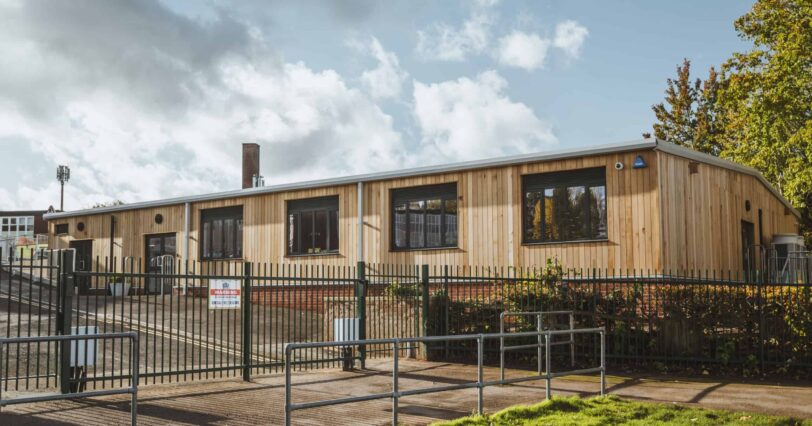
Our modular solutions can be fitted with renewable energy technologies and sustainable features, including solar heating systems, integrated photovoltaic (PV) panels, LED lighting and rainwater harvesting. This ensures that school estates become increasingly efficient, lowering emissions and improving air quality. These features can be included when deploying new, modern infrastructure or by upgrading existing facilities.
How can modular construction improve air quality in schools?
Poor air quality can be tackled in school buildings and around education sites through Modern Methods of Construction (MMC). Modular buildings generate up to 45 per cent less emissions than conventional practices, and due to 90 per cent of the construction taking place offsite, there is minimal on site emissions, traffic or disruption to student life and the school environment. At Net Zero Buildings, our modular, design-focused methods utilise low and zero carbon technologies, offering a solution which limits the detrimental impact new buildings and facilities have upon schools, the environment and local communities.
Improving air quality in schools is an urgent priority for estates managers to protect student health, support learning outcomes, and contribute to national Net Zero targets. As a result, new buildings or refurbishment projects need to be delivered in a sustainable, effective manner and feature thoughtful design elements that implement key, proven green technologies.