
The education landscape in the UK is constantly evolving, and school leaders and estate managers are under pressure to constantly adapt.
Since September 2025, eligible working parents of children aged between nine months and four years old in England have received 30 hours a week of government-funded childcare, creating a huge demand for early years provisions. Over a million parents in England now use these childcare hours, and investments are being made into school-based nurseries (SBNs) as a solution to soaring demand. These are nursery provision located on an existing school site, which aim to make the school run simpler, helping parents return to work.
The government is creating over 3,000 SBNs in England and primary schools across the country can currently apply for funding to run nurseries at their schools. Phase 2 of applications recently closed, and successful recipients of capital grants 2025-2026 have been notified. The Department for Education (DfE) has also announced Phase 3 of funding for SBN provision. State-funded primary, Maintained Nursery Schools, as well as Best Start Family Hubs (BSFH) are able to express an interest to the Local Authority (LA) for capital funding of up to £400 million to create or expand on-site Early Years provision.
To ensure schools can capitalise on this opportunity, estate managers must meet certain requirements within applications. For example, the DfE has laid out specific criteria and stated that for Phase 3, applicants will be ranked on both affordability and disadvantage, based on free school meal eligibility and the income deprivation affecting children index (IDACI).
Applications should focus on these requirements, and MMC can offer those applying the ability to demonstrate affordability, sustainability and flexibility.
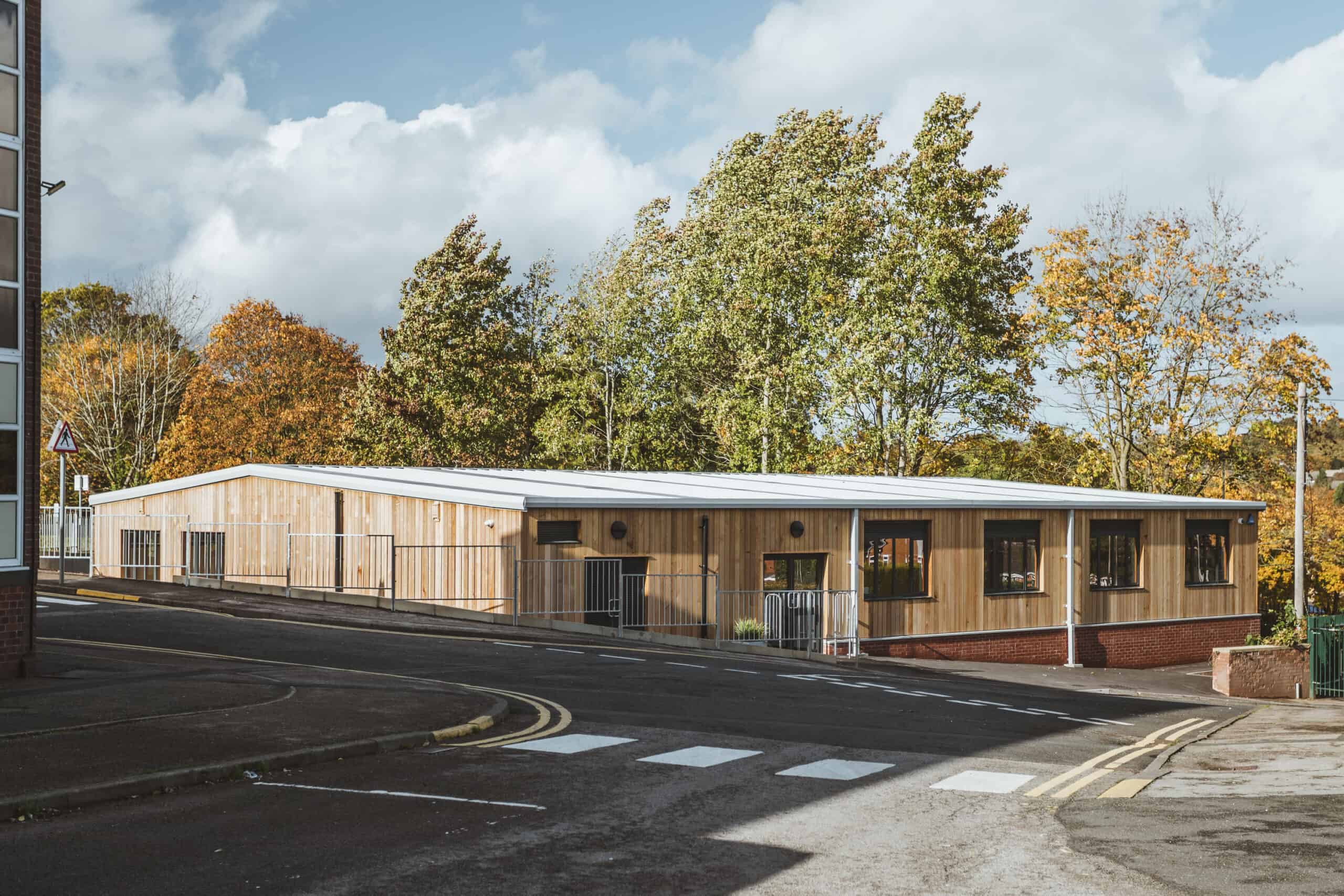
One of the advantages of modular construction is that the transportable buildings can be delivered quickly and effectively anywhere across the country, with no geographical limitations. Modular buildings can be constructed with minimal disruption, whilst navigating the complexities of a site safely, and due to up to 90% of the build taking place offsite, disruption to the live environment and delays due to weather or space restrictions are also significantly reduced. For this reason, modular construction is used across many education projects, as vital operations can continue to function.
Modules can also be reused, reconfigured, or relocated to respond to shifting needs and demand. Reliant on four structural posts, the rest of the interior infill panels can be adapted, and the flexible nature of the buildings allows units to be easily extended or reconfigured. This offers practical benefits while demonstrating circularity in action, as the unique, adaptable nature of modular buildings means that they are either repurposed or recycled at end-of-life, so the embodied carbon within the structures never gets released, leading to lowered emissions.
Rental modular specifically can also help education teams to demonstrate the affordability of new SBNs, providing cost certainty as organisations can fund new facilities at a set amount, over a longer period of time. Demand for SBN’s can be accurately determined based on changing data and circumstances, including cost of living, new housing developments, birth rates and local authority forecasts, so the most appropriate length of time/hire period can be selected to provide benefits and ensure the investment is optimised.
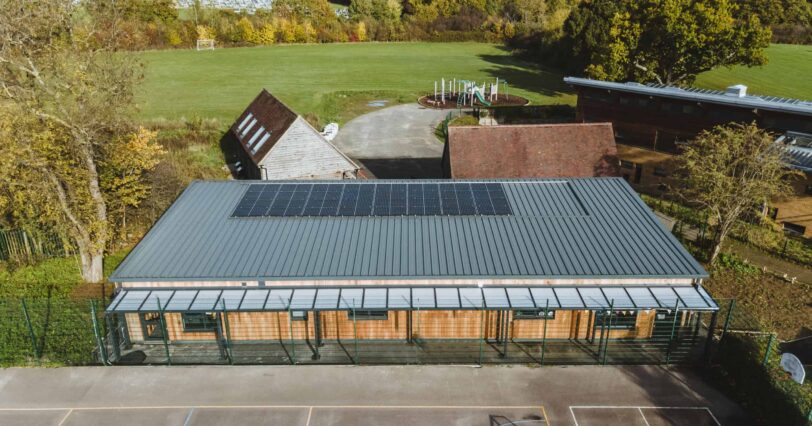
Operational costs of modular buildings can also be significantly reduced for schools by sustainable features being incorporated in the design phase. For example, the building fabric can be enhanced with high performance insulation to minimise heat loss, ultra efficient LED lights can be fitted and air source heat pumps, solar panels, rainwater harvesting systems, and intelligent plug sockets can be used, all lowering energy consumption and reducing electricity bills.
Finally, modular buildings can maximise capacity while keeping the classroom layout inclusive, comfortable and effective. Due to the customisable, flexible nature of units, modular facilities can be specifically altered to accommodate more children, allowing schools to receive more per-person funding. They can also be designed effectively to improve operational costs. For example, SBN’s can share facilities with the existing main school building, such as the staff room to reduce the cost of the design because the layout is less complex.
As demand for early years provision grows, SBNs present a valuable opportunity for schools to expand their offer, support families and secure additional funding. Modular construction gives schools a practical way to secure funding and deliver flexible facilities quickly, affordably and sustainably, while minimising disruption to the live learning environment.
Want to find out more about how we can support with your planned school building or funding application? Contact the team here.