
The government has recently budgeted £570 million for post-16 capital investment, with applicant outcomes set to be announced from July this year. The focus of the funds are two-fold – first, to increases student spaces offered by further education providers and, second, to help invest into construction and trade skills.
This comes at a critical time for further education, with colleges under increasing pressure to respond to demand. With proposed projects needing to deliver new places by September 2028, the challenge will not simply be about building more space. Instead, schools and colleges need to be intentional in utilising the funds and responding to student demand effectively. Modern methods of construction (MMC) and flexible building solutions will be key to delivering on the fund’s aims.
Read on to find out how MMC will be the key to unlocking the value of the post-16 capacity fund as projects are delivered.
Delivering on speed, scale and quality
As demand for further education spaces fluctuates, traditional construction is unable to keep pace. By contrast, MMC utilises precise manufacturing methods that optimise building resilience, ensure structural integrity and deliver on sustainability criteria. These high-quality buildings can also be delivered in a fraction of the time – a critical factor for colleges needing to respond to immediate capacity pressures.
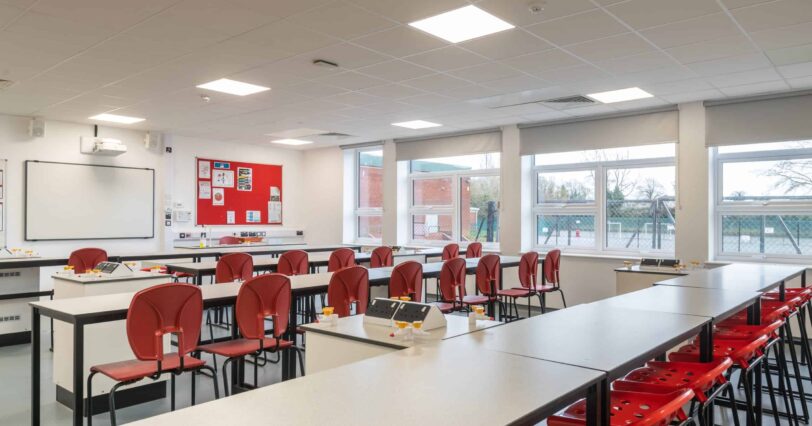
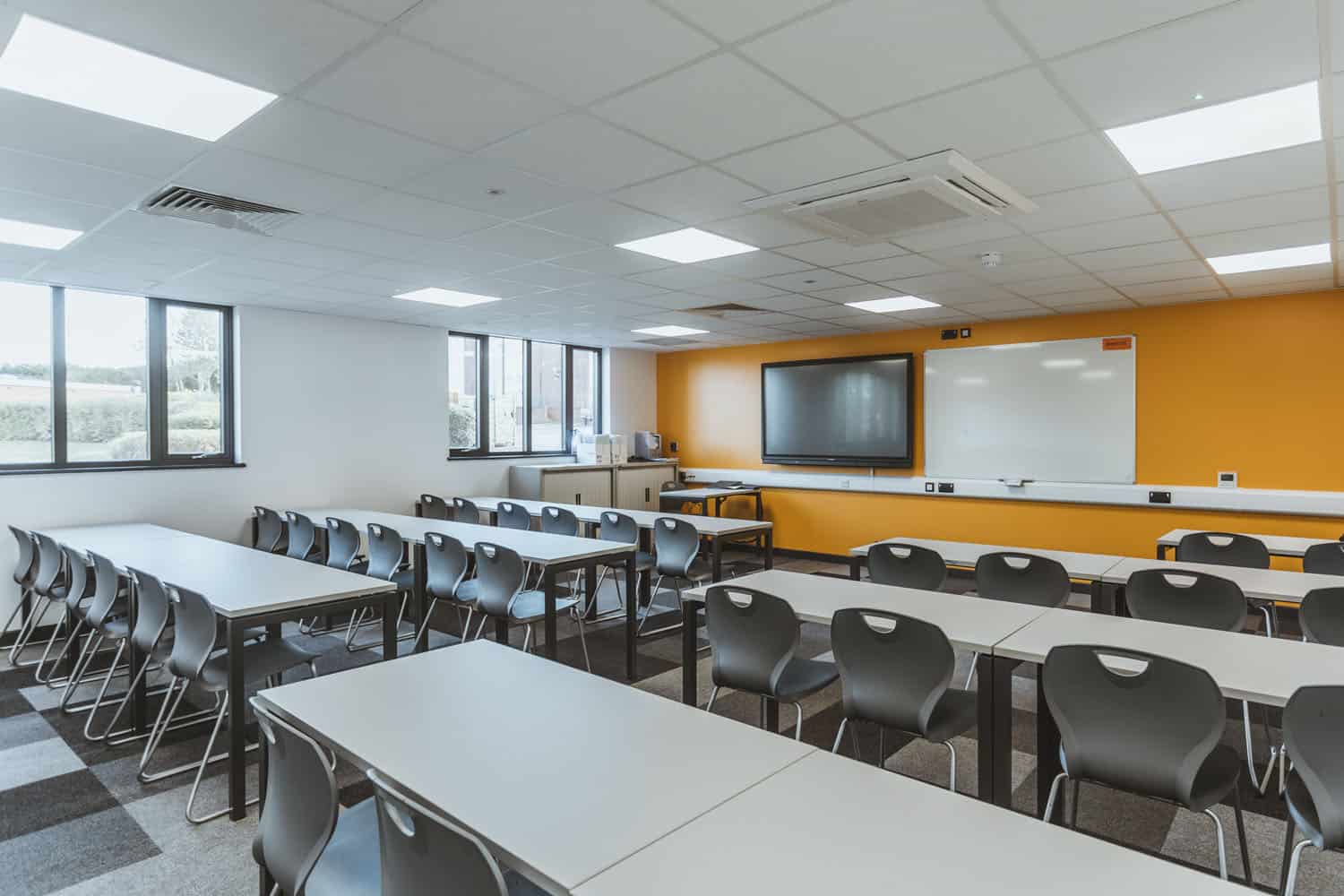
Colleges delivering on projects under the government’s new capacity fund can leverage the speed of MMC, without sacrificing quality of the learning environment. This speed will also have a direct impact on construction skills delivery, with faster programmes meaning colleges can implement new workshops and specialist classrooms for training sooner. In turn, this addresses immediate local skills shortages whilst also ensuring students are being trained in environments that reflect the modern construction methods they will be learning about.
Investing with intention
For successful applications in September who will receive the government’s funding, cost efficiency still remains an important factor in the success of projects. Temporary MMC solutions reduce upfront capital expenditure, whilst lowering lifecycle costs through energy savings, ensuring finite funding is not wasted. This will also put colleges in a better position to expand specialist construction and trade courses in high-quality learning environments, that could otherwise have been constrained by space or cost.
The DfE are actively encouraging the use of temporary buildings under the new funds, to allow estates managers to test and validate demand before committing to permanent infrastructure, as, due to birth rate fluctuations, the number of spaces needed for individuals is likely to change over time. Rather than locking further education institutions into fixed, high-cost developments, MMC enables a phased strategy which can allow colleges to deliver with speed, test demand and scale sustainably.
Planning for the future
One of the most significant advantages for the use of MMC under the post-16 capacity fund is flexibility. While colleges may be feeling the pressure of meeting student demand, this along with funding priorities and local skills needs are, by nature, subject to change. In this context, permanent builds risk limiting colleges’ adaptability.
Temporary solutions and modular buildings, however, can be scaled to meet capacity as required, reconfigured for different course types or student needs, and repurposed for alternative uses beyond the initial function. For construction skills, these spaces can be reconfigured from general teaching areas to specialist training environments, or vice versa, allowing colleges to quickly respond to emerging skills gaps or changes in curriculum focus. The temporary nature of the facilities means there won’t be another building there to maintain beyond its use, as it will be removed and the ground will be restored to how it was before.
For the post-16 capacity fund, this will be crucial, as the DfE is prioritising the allocation of permanent funds for estates that can prove how plans will support a long-term strategy. The adaptability of MMC and modular solutions ensures that investment made early continues to deliver value in the future, even as requirements evolve.
The post-16 capacity fund represents an opportunity for a smarter approach to meeting student demand, and investing in future skills, that could prompt a significant shift in the further education sector. As projects are delivered, however, the unique benefits of MMC and temporary solutions will be the key to success. Enabling rapid expansion, supporting the development of construction skills and providing flexibility that is essential to navigating uncertainty, these routes will help create future-proofed estates in colleges across the country.
Want to find out more about how MMC can deliver adaptable, future-proofed estates for colleges? Contact the team here.