

As we settle into the new year, school estate managers have a prime opportunity to put their 2026 plans into action and set the tone for the months ahead. Following the break, students and staff return refreshed and refocused, making it the ideal moment to introduce new initiatives, policies, investments and work towards long term goals.
So, what are the key areas estate managers should prioritise to plan effectively for 2026?
Financial and environmental sustainability
Many UK schools have faced years of constrained budgets due to rising costs across energy, maintenance, and staffing. At the same time, schools are working towards the government’s 2050 net zero target, while complying with the Climate Action Plan, which includes requirements, such as having a designated Sustainability Lead.
Amid these various pressures, in 2026, estate managers should focus on reducing overall running costs by investing in sustainable areas which increase efficiency. By prioritising low-cost, high-impact strategies that support both environmental and financial sustainability, schools can work towards net zero targets while redirecting savings back into children’s education. For example, ‘smart’ plug sockets can be implemented to reduce overall energy use, increase efficiency and lower costs for schools.
Health, safety and compliance
If you speak to any estate manager about planning for the year ahead, their first consideration is their health and safety check list. Sites are audited increasingly frequently, and schools need to stay on top of the evolving compliance and health and safety landscape in education.
Structural considerations are front of mind, especially amid efforts to reform fire safety and The Department for Education (DfE) officially setting a timetable to remove reinforced autoclaved aerated concrete (RAAC) from every school and college in England.
Additionally, general onsite safety is of paramount importance. Amid an increasing number of audits, estate managers need to ensure routine maintenance and safety checks are consistently carried out, for example, regularly testing electricity, levelling paving slabs, or, urgently gritting the ground when there is frost.
In 2026, it is vital that school buildings are safe and fit for purpose, and estate managers should review the condition and suitability of existing assets. For example, a building that once functioned effectively as a classroom may now need to be used as a SEND hub to accommodate the 1.7 million pupils in England identified as having special educational needs. However, it’s unlikely that these older buildings are compliant with a layout, design and structure suited to the modern needs of students and staff.
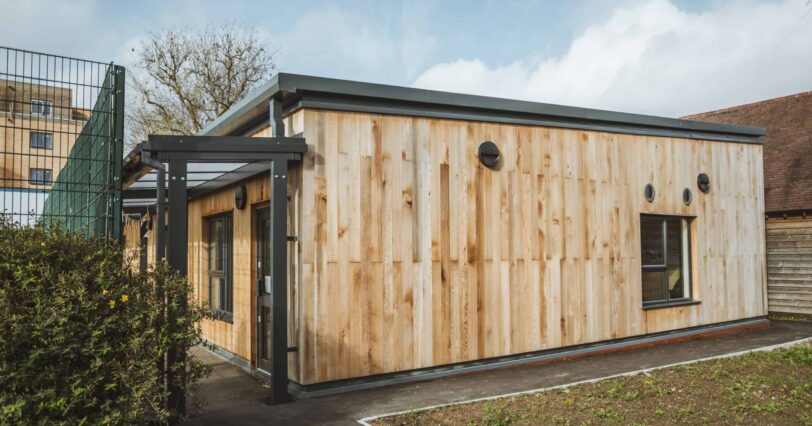
Consequentially, the need to replace dilapidated or disused school buildings will continue to be a major challenge for schools. Where facilities are beyond their design life and at risk of closure, the cost of bringing them up to modern safety and compliance standards is often unsustainable. Instead, schools should look to new, efficient buildings that will be approved by building control. To accommodate schools’ needs within tight timelines and budgets, we deliver our schemes using modern methods of construction (MMC). Our factory-based manufacturing helps ensure our contracts run to planned timelines, as projects can be turned around faster and are less likely to be affected by site issues, such as weather delays, making budgets more controllable and predictable.
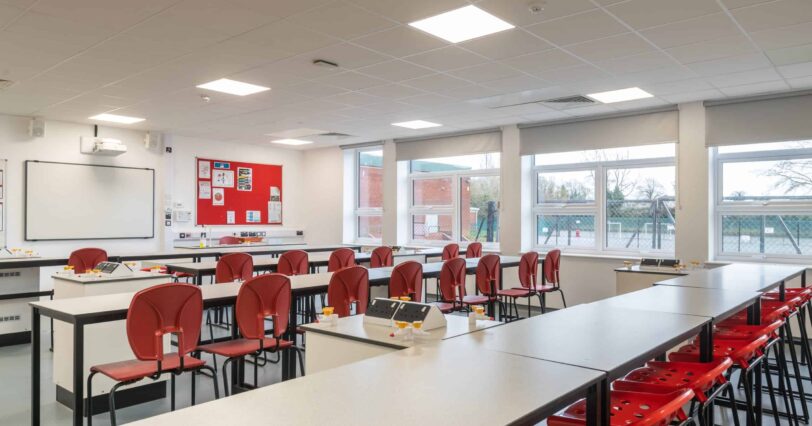
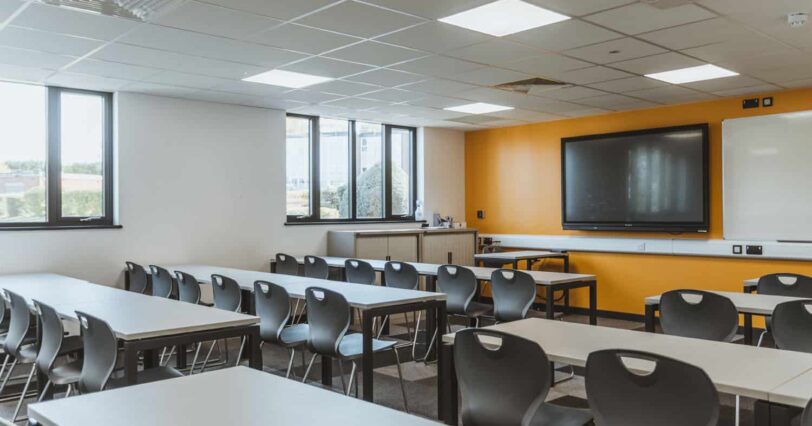
These modular solutions can be constructed and deployed quickly, as well as being easily customisable and able to adapt to schools’ ever-changing needs. For example, the layout of units can be adjusted to meet demographic changes, curriculum demand or even remove partitions to improve accessibility and accommodate SEND pupils. Our modular buildings can also include tailored design features, for example, sensory or ‘quiet’ areas and acoustic panels to reduce noise levels.
The use of modular solutions and offsite construction is set to skyrocket in 2026, offering schools low carbon, energy efficient buildings constructed through methods and solutions which reduce waste, emissions, and disruption. Vitally, from a circularity and sustainability standpoint, modular solutions are inherently reusable, reconfigurable, and recyclable. Our solutions also offer additional benefits, including solar panels and air filtration systems.
Planning with purpose
Every decision by estate managers should prioritise the impact on children and help schools work towards long term goals. Site managers must ensure decisions are appropriate for the space, the children, and the wider school community. Actions taken in 2026 should focus on collaboration amongst stakeholders, where clear objectives are agreed upon so that all choices are made with a holistic, shared perspective.
Sustainable Schools
The new year is the perfect time to implement efficient and sustainable policies at your school. By prioritising energy efficiency, low-carbon building solutions, and long-term planning, estate managers can reduce running costs, improve safety, and create learning environments that are fit for purpose.
Want to hear more about how we’re supporting schools in 2026? Get in touch with one of our experts today.