
As schools break for Christmas and prepare to head into the new year, there are a number of trends set to shape their estates. With several already gaining momentum this year, these key areas of focus will be making an even greater mark on school buildings across the country in 2026.
Read on for our insights into the top trends that will shape how schools will optimise their estates in the year ahead.
1. Designing for wellbeing and inclusivity
Schools across the UK are taking steps to incorporate wellbeing-centric design to improve classrooms for both students and staff. Schools are increasingly implementing features such as living walls and indoor plants to bring elements of nature indoors, themed areas of the school site to improve navigation, and acoustic panels for noise reduction. These help to minimise stress, potentially even improving student concentration and engagement levels.
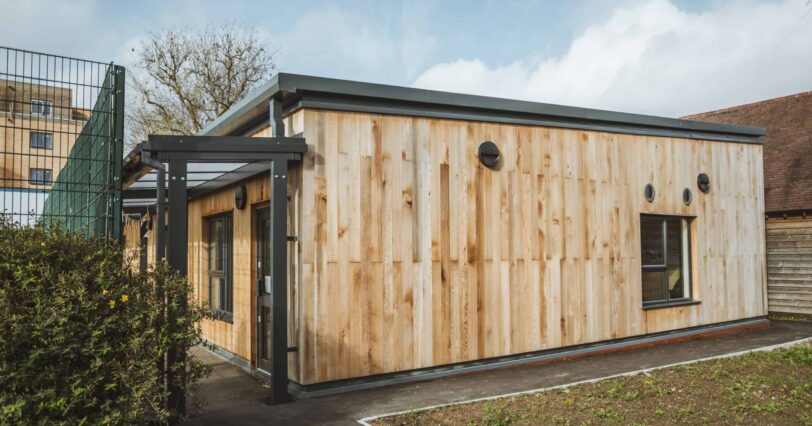
MMC (Modern Methods of Construction) and modular buildings can also help to incorporate this, allowing schools to have a designated hub as a temporary, semi-permanent or permanent solution specifically designed with health and wellbeing in mind. Design approaches that aim to boost wellbeing can also help to improve staff retention and happiness, potentially reducing the need for supply teachers.
As well as improving student wellbeing, MMC can help schools to create more inclusive learning environments. Already a defining theme within the education sector, the new year is likely to see a greater focus on this. This will include a continued recognition of the unique needs of SEND students, along with pupil premium children, children in need and looked after children, to further reduce the attainment gap. Inclusivity can be enhanced through features such as adjustable lighting and ventilation, ‘quiet’ areas or breakout rooms and soft furnishings to absorb sound and echo.
To read more about wellbeing-centred design in schools, read more here.
2. Resilient buildings that last
It’s no secret that many school buildings are experiencing signs of deterioration due to being built using outdated construction methods. As they reach the end of their life cycle, the fragility of school buildings has worrying implications for the health and safety of students and staff. This year, schools have gained a clearer picture on the severity of this, as the government continues to push for the complete removal of Reinforced Autoclaved Aerated Concrete (RAAC), with 123 schools with RAAC set to be rebuilt through the School Rebuilding Programme (SRP).
Schools are now prioritising resilient infrastructure to truly optimise their estates. In line with this, MMC’s precise manufacturing methods can help to create complex, high-quality buildings with excellent structural integrity. These are built to withstand the test of time and can also be re-purposed and re-configured to ensure schools are investing into durable solutions that can be adapted later down the line.
To find out more about how MMC creates resilient school buildings, click here.
3. Adaptable infrastructure built with the future in mind
As well as resilient buildings, the need for flexible school estates is also growing. In 2025, we have seen many schools struggle to meet fluctuating demand. There are examples of planned expansions not able to meet forecasted pupil numbers, as seen in areas such as Bedford, along with instances of unfilled student spaces, as seen in Birmingham.
Student numbers can be unpredictable, meaning schools need to remain flexible and able to adapt. MMC offers unparalleled adaptability, allowing estate managers to invest in modular solutions that can respond to fluctuating demand, without having to invest in permanent solutions that may not remain reflective of school needs in the long-term.
To learn more about how MMC and modular construction can help schools respond to fluctuating demand, read here.
4. Sustainable development
Alongside any emerging trend, sustainability has remained a consistently growing focus for years across the education sector.
Scope 3 emissions, for example, are a key contributor to the carbon footprint of school estates, accounting for the indirect emissions produced throughout the value chain, such as through building materials and waste management. Modular buildings are a great option for school estates that are looking to minimise this and get ahead on their sustainability journey. Construction takes place offsite in controlled factory environments and, here at NZB, our buildings are designed to go beyond the baseline of building regulations, creating truly sustainable solutions.
MMC and modular buildings also enhance energy efficiency through precise manufacturing methods, which can create airtight environments for thermal efficiency, helping to save on long-term operational costs.
Read more about how MMC and modular buildings are helping school estates turn their sustainable goals into reality.
For schools which may not yet be considering the above trends, and for those which might already have them on their radar, now is the time to begin reviewing your estates through a broader lens and planning for 2026.
Ready to future-proof your school estate in 2026? Get in touch with one of our experts today.