
The government has recently announced a raft of changes impacting school estates, which have highlighted the increasing need for school buildings and spaces to be highly adaptable to meet the evolving requirements of modern education.
For example, this month saw the release of the new revised national curriculum, which aims to give young people the skills for future life and work. Changes include enhancing the teaching of IT, AI and data science, adding additional lessons in arts, culture, and life skills, and offering triple science as standard.
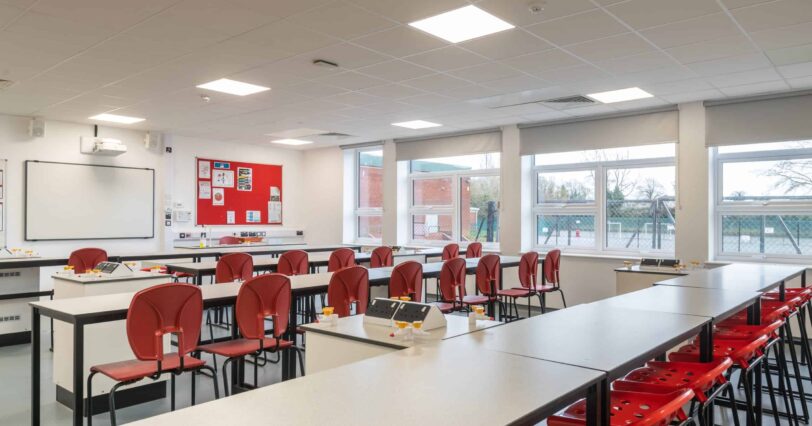
The new curriculum will be implemented in full, for first teaching from September 2028. The government will aim to publish the final revised national curriculum by spring 2027, giving schools four terms to prepare for the changes. Necessary preparations will include incorporating new computer labs, science facilities and art classrooms.
Similarly, the education secretary has also set a roadmap to improve attendance levels, including initiatives like cooking classes, crochet and sign language and rolling out free breakfast clubs. Again, school spaces will have to change accordingly, for example by creating new breakfast or cooking facilities.
So, what does this mean for education estate managers as we approach the end of 2025?
Flexible, future ready modular spaces
The education sector’s use of space has been shifting over time, and this will accelerate in the coming years. Schools need to adapt to declining birth rates, rising numbers of SEND students and policy changes, such as new sustainability regulations, being introduced.
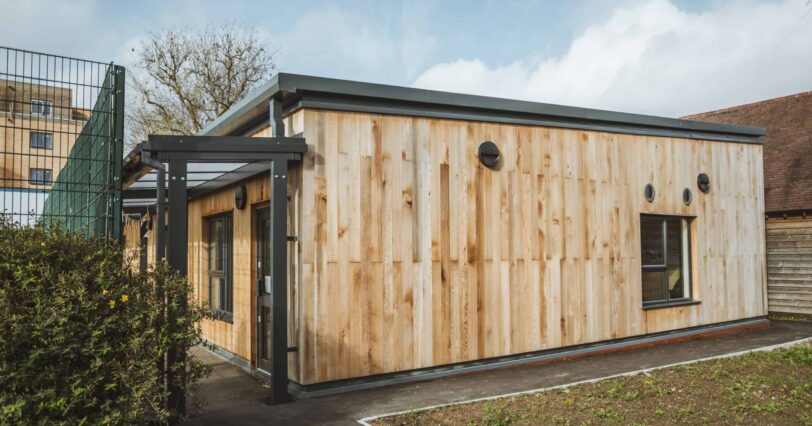
To achieve this, schools will require flexible, scalable buildings rather than fixed, immobile assets. Modular solutions are increasingly being used across school estates, as these buildings can scale up/down, relocate, or be reconfigured based on changing needs.
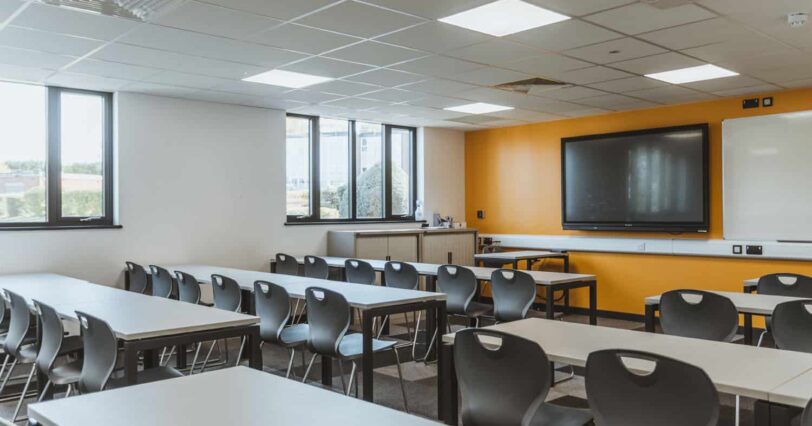
Modular buildings also allow for a vast variation of uses, for example, by incorporating tailored features, and are highly customisable dependent on the needs at the time. This flexibility ensures that schools can accommodate modern teaching practices, including flexible timetables and individual learning plans.
Schools are often operating within tight timelines and budgets. Modular buildings can support estate managers through incredibly effective delivery. Built offsite in controlled factory environments, modular construction uses a quicker, more streamlined manufacturing process, and allows buildings to be constructed at the same time as the ground is being prepared. This lessens the time projects take to be completed compared to traditional building methods, where teams must wait for the ground to be ready before any building can commence. Offsite manufacturing ensures a quicker turnaround, reduced costs and minimal disruption to existing operations.
For those that need space fast or undergoing refurbishment or remodelling projects, modular buildings can also act as a lifeline to accommodate students and staff during construction. Once developments are complete, the modular units can be removed or repurposed. Alternatively, if the need for space is more long term, these buildings can be designed to serve as permanent structures, providing durable functional, adaptable spaces for years to come.
Green, clean schools of the future
For education estate managers, achieving net zero is an important goal. As fresh policies and changing circumstances lead to more investment in new classrooms, facilities and other spaces, schools will use this as a valuable opportunity to improve their carbon footprint.
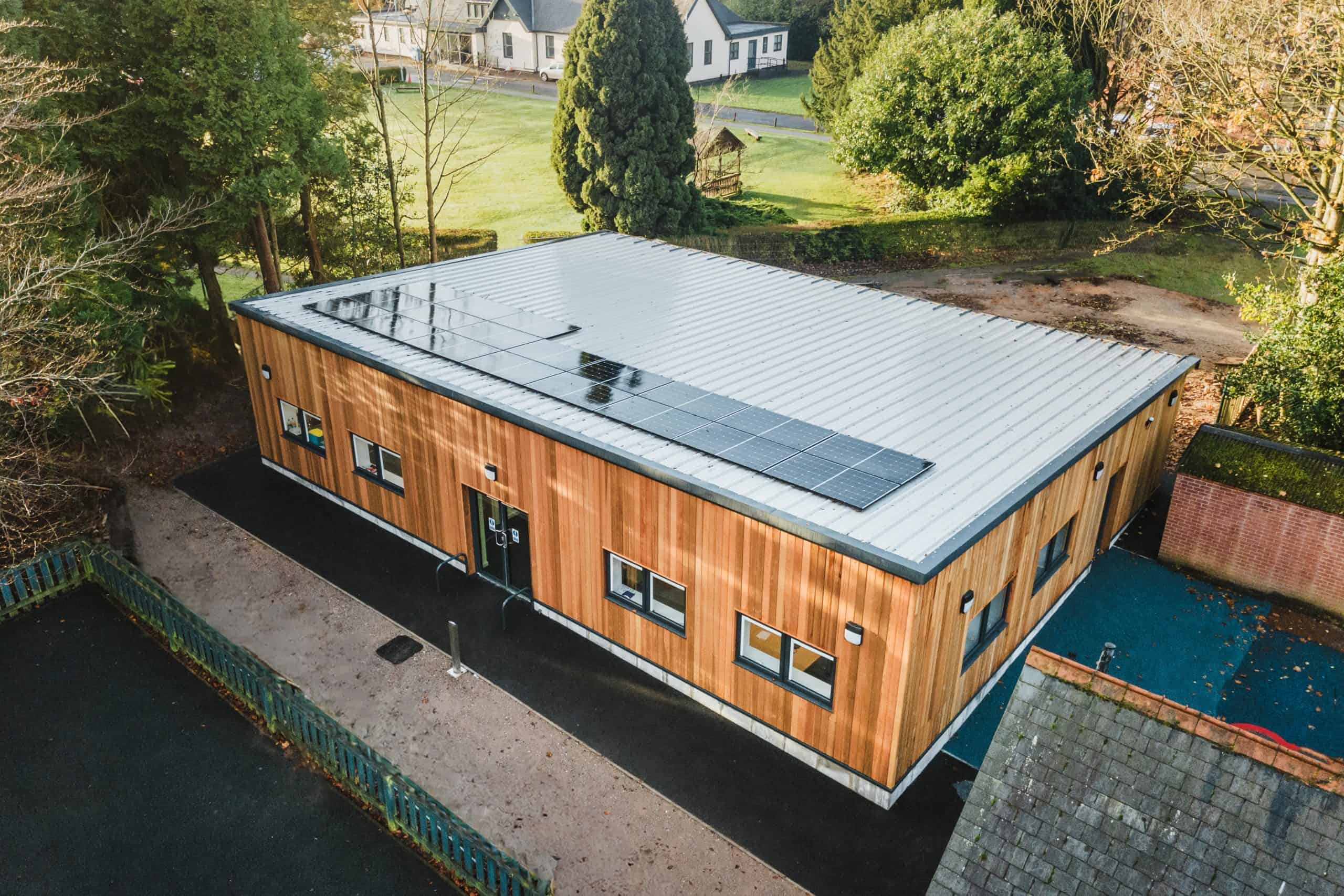
We help schools achieve their sustainability targets. Due to our precise manufacturing techniques, air permeability is minimised in your building, leading to enhanced thermal efficiency. A range of advanced energy efficient technologies can also be incorporated into modular buildings, including solar panels which reduce schools’ reliance on fossil fuels and lower electricity bills. Ground source heat pumps and rainwater harvesting systems can also be used to conserve energy and water.
At NZB, we create zero waste to landfill, helping schools reduce their Scope 3 emissions. Both our permanent and temporary buildings are designed to be ‘net zero carbon in operation’, aligning with Climate Action Plans and wider sustainability objectives. We manufacture our modules in a controlled factory environment, and our precise lean manufacturing principles lower the embodied carbon of your build. Our modular buildings are designed with circular economy principles front of mind, as structures can be repurposed, relocated or reconfigured to meet changing educational needs.
By embracing adaptable modular design and prioritising sustainability, schools can future proof their estates, ensuring every space is ready to deliver high quality learning, meet shifting policies, and curriculum demands and support future generations.
Want to learn more about how modular construction can support your school estate? Check out our case studies.