

As school estate managers face ageing buildings and infrastructure, increasingly severe weather as a result of the climate crisis and fluctuating student numbers, resilient education facilities must be prioritised. Today’s schools require buildings that can withstand emergencies and adapt during crises, ensuring student safety and allowing for learning to continue.
Modern methods of construction (MMC) and modular buildings can help to provide a quick, cost-effective solution for schools during unprecedented events – including structural or safety issues, extreme weather and even national emergencies, with lessons being learnt from the recent inquiry into the impact on young people during the Covid pandemic.
The pandemic is one example of schools having to quickly and effectively adapt to meet new requirements. In this case, this was done through social distancing, handwashing, air quality and other safety advice. As well as these measures, many schools turned to temporary modular buildings to provide the additional, adaptable space that was required. As future pandemics and similar crises become more likely, school estates will need to remain flexible.
Responding to national emergencies
During the Covid crisis, many schools struggled to keep pace with changing national guidance but implemented various measures to increase safety within classrooms; these included visual cues for social distancing guidance, distribution of masks along with altering learning schedules to control classroom numbers.
In the case of another pandemic, these measures will certainly remain important for schools. Resilient, flexible buildings, however, are just as important, and MMC can help to achieve this. Modular buildings can be delivered under time constraints, providing classrooms that respond to unpredictable events or short notice changes to national guidance.
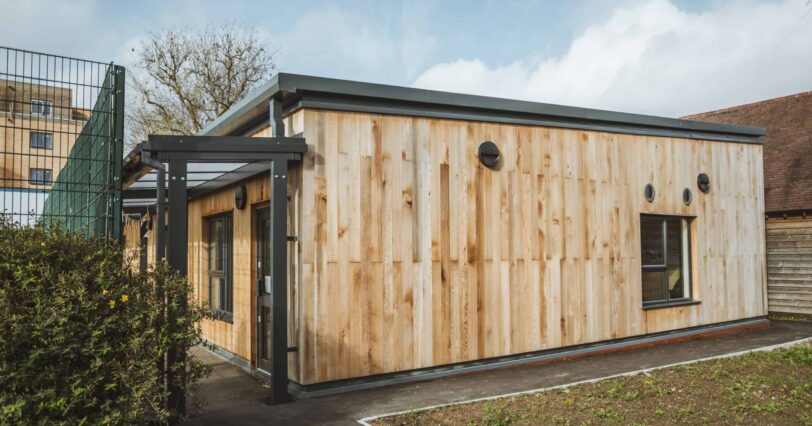
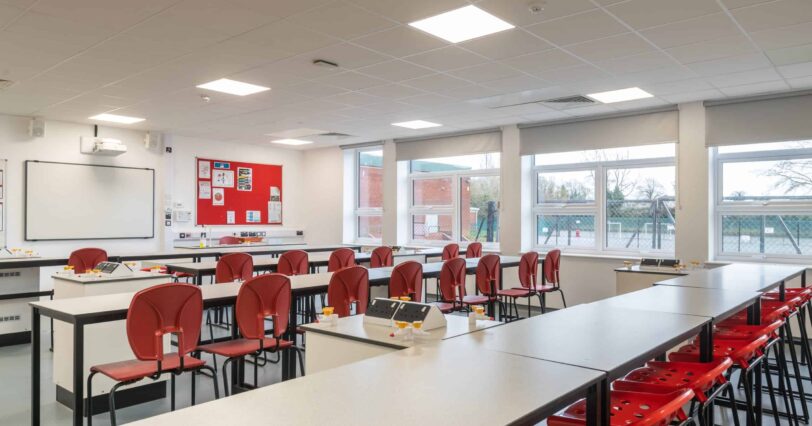
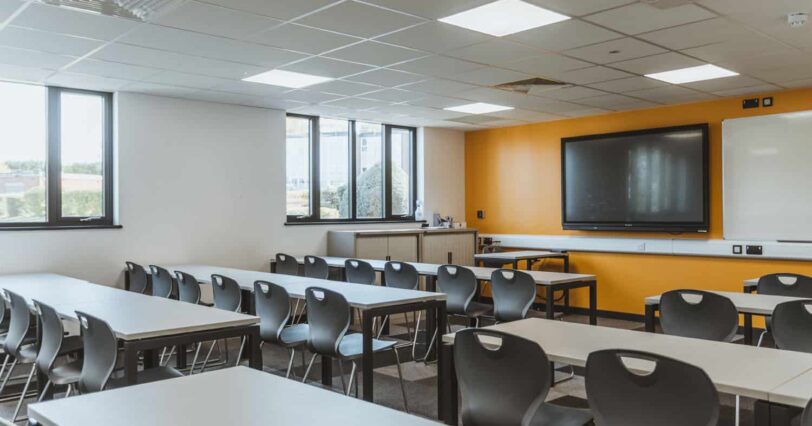
These buildings offer spaces that can be moved both to or around the estate and adapted through features such as room dividers to control student numbers – allowing schools to invest in solutions that are flexible to unpredictability. This can also be valuable in response to isolated outbreaks in specific schools, providing classrooms via a construction method that minimises disruption to learning, the community and the environment, creating units that are adaptable based on both size and location.
Becoming resilient to extreme weather
Another way in which MMC can help better prepare school estates for emergencies is during extreme weather conditions, emphasised by the potentially increasing impact of the climate crisis. Weatherproofed buildings are not simply a ‘nice-to-have’, but essential to ensuring the safety of students and staff on site.
Through precise manufacturing, MMC can create airtight buildings for optimal thermal efficiency – controlled ventilation, effective insulation, along with energy efficient heating and cooling systems all help to maintain ideal temperatures in classrooms during severe weather, enhancing concentration even during extreme weather conditions.
Modular buildings also keep construction work away from the site as much as possible and can deliver finished classrooms in a matter of weeks, or even days as an emergency response to flooded classrooms, for example. This can, once again, be crucial to reducing learning disruption often caused by closures or structural damage during severe weather, easing the transition to new, resilient learning environments. This can be especially crucial if teaching needs to continue for high-priority subjects, when preparing students for upcoming exams, or during transition periods between school years when children will require extra support.
Building with the future in mind
Many school buildings today are showing clear signs of deterioration as they reach the end of their serviceable life, often due to structural issues created by outdated construction techniques. A report published by the National Audit Office (NAO) indicated that, by 2023, over a third of school buildings in England were already past their estimated initial design life. This is further highlighted today, as the government focuses on removing Reinforced Autoclaved Aerated Concrete (RAAC) from schools due to its weak structural integrity and lack of long-term durability.
Moving forward, the education sector is in need of new infrastructure and refurbishments to be rolled out efficiently, and with minimal disruption to learning and nearby communities. MMC and modular buildings can deliver complex, high-quality buildings in short time frames, keeping construction offsite. With MMC’s precision manufacturing, these buildings provide resiliency over the long-term, ensuring school infrastructure does not deteriorate and pose risk to students and staff.
As well as minimising physical risk, MMC can ensure these buildings remain adaptable both to emergencies, along with the evolving needs of school estates – including fluctuating student numbers, and an enhanced focus on sustainable buildings created with low-carbon methods.
As school estates evolve, the need for resilient buildings that can adapt to respond to emergencies is becoming more important than ever. With outdated buildings showing signs of deterioration, MMC and modular construction can help to plug the gap, keeping both safety and the continuation of learning at the forefront during times of crises.
Ready to future-proof your school estate for emergencies? Get in touch with one of our experts today.